Johor Bahru's TOPIK specialist centre since 2017
TOPIK Preparation Course in Malaysia — Johor Bahru & Online
Prepare for TOPIK I and II with certified Korean teachers. Small classes of up to 8 students, real exam timing, and teacher-marked essays for TOPIK II Writing.
- Since 2017
- MOE registered · JZ1B031
- 100% certified Korean teachers
- Max 8 students per class
- In person or online (HyFlex)
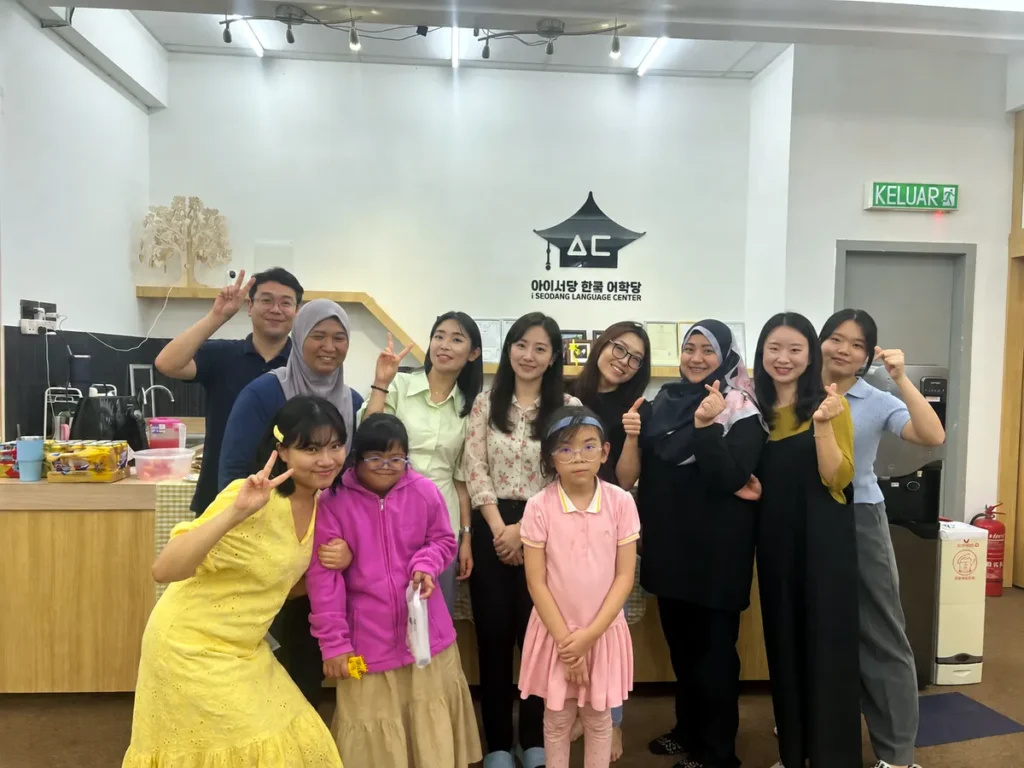


Inside iSeodang
Real moments from our classes, events and partner programmes.
What Is the TOPIK Exam and Who Needs It?
TOPIK (Test of Proficiency in Korean) is the official Korean language test run by the National Institute for International Education (NIIED) under Korea's Ministry of Education. First held in 1997, it is now offered in 89 countries and receives more than half a million applications a year. Korean universities, employers and government offices accept it as proof of your Korean level.
- Run by NIIED, Korea's Ministry of Education
- 89 countries (2026 plan)
- Levels 1 to 6
- Valid for 2 years
University admission
Most Korean universities ask international applicants for TOPIK Level 3 or 4, and many ask for Level 4 or higher to graduate. Requirements vary by university and department.
Korean university guide →Scholarships
A TOPIK certificate can strengthen scholarship applications, including the Global Korea Scholarship (GKS) and university tuition discounts. Rules change every year, so check the current guidelines.
Jobs & promotion
Korean companies in Malaysia and abroad use TOPIK as a hiring and promotion benchmark, especially for roles that work with Korean clients or head offices.
Visa & residency
TOPIK results are used in several Korean visa and residency assessments, such as D-2 student visas and the F-2-7 points-based residence visa. Always check the latest official immigration rules.
Korean student visa guide →iSeodang university pathway
Through our MOU partner universities in Korea, eligible iSeodang graduates receive admission guidance and may qualify for admission benefits or scholarships. Conditions differ by university.
Our MOU partners →Measuring progress
An objective, internationally comparable score — not a school's own internal grade.
TOPIK vs EPS-TOPIK vs KIIP: Which Korean Test Do You Need?
These names sound alike, but they are different tests with different purposes. Choosing the wrong one can waste months of preparation.
| TOPIK | EPS-TOPIK | KIIP | |
|---|---|---|---|
| Purpose | Study, work and general Korean proficiency | Selecting workers under Korea's Employment Permit System | Social integration programme for foreign residents |
| Run by | NIIED (Ministry of Education) | HRD Korea (Ministry of Employment and Labor) | Ministry of Justice |
| Where | 89 countries, including Malaysia | EPS partner countries such as Vietnam, Thailand and Indonesia | In Korea only |
| Result | Level 1–6, valid for 2 years | Score used to select job seekers | Completion of programme stages |
| Best for | University applicants, professionals and all learners | People applying for EPS jobs in Korea | Long-term residents already living in Korea |
Our TOPIK course prepares you for TOPIK. If your goal is EPS-TOPIK, message us first so we can check whether our classes fit your plan.
2026 TOPIK Exam Dates in Malaysia and Korea
Paper tests (PBT) are held six times a year in Korea. Malaysia holds fewer rounds, in Kuala Lumpur. The registration status on each card updates automatically in Malaysia time.
 Paper (PBT)
Held in Malaysia
Paper (PBT)
Held in Malaysia 108th TOPIK
Registration closed
- Test date (Malaysia)
- Registration (Malaysia)
- –
- Venue
- Kuala Lumpur
- Test date (Korea)
- –
- Registration (Korea)
- –
- Results
Confirm with organiser
Add to calendar
 Internet (IBT)
15th TOPIK IBT
Registration closed
- Test date (Korea)
- Registration (Korea)
- –
- Results
Add to calendar
12th TOPIK Speaking
Registration closed
- Test date (Korea)
- Registration (Korea)
- –
Add to calendar
 Paper (PBT)
109th TOPIK
Registration closed
- Test date (Korea)
- Registration (Korea)
- –
- Results
Add to calendar
Internet (IBT)
16th TOPIK IBT
Registration closed
- Test date (Korea)
- Registration (Korea)
- –
- Results
Add to calendar
2027 TOPIK dates
NIIED usually announces the next year's plan in autumn. We will add the 2027 dates here as soon as they are published.
Earlier 2026 rounds (10)
Internet (IBT)
14th TOPIK IBT
Completed
- Test date (Korea)
- Registration (Korea)
- –
- Results
 Paper (PBT)
107th TOPIK
Completed
- Test date (Korea)
- –
- Registration (Korea)
- –
- Results
11th TOPIK Speaking
Completed
- Test date (Korea)
- Registration (Korea)
- –
Internet (IBT)
13th TOPIK IBT
Completed
- Test date (Korea)
- Registration (Korea)
- –
- Results
 Paper (PBT)
106th TOPIK
Completed
- Test date (Korea)
- Registration (Korea)
- –
- Results
 Paper (PBT)
Held in Malaysia
Paper (PBT)
Held in Malaysia 105th TOPIK
Completed
- Test date (Malaysia)
- Registration (Malaysia)
- –
- Venue
- UniKL MIIT, Kuala Lumpur
- Exam fee
- TOPIK I RM 120 · TOPIK II RM 170
- Test date (Korea)
- –
- Registration (Korea)
- –
- Results
10th TOPIK Speaking
Completed
- Test date (Korea)
- Registration (Korea)
- –
Internet (IBT)
12th TOPIK IBT
Completed
- Test date (Korea)
- Registration (Korea)
- –
- Results
Internet (IBT)
11th TOPIK IBT
Completed
- Test date (Korea)
- Registration (Korea)
- –
- Results
 Paper (PBT)
104th TOPIK
Completed
- Test date (Korea)
- Registration (Korea)
- –
- Results
How to register for TOPIK in Malaysia
- Check the noticeKEC Malaysia (Korean Education Centre in Malaysia) announces each round, usually about three months before the test.
- Prepare your documentsApplication form, a recent photo and your passport or MyKad details — exactly as the notice asks.
- Pay the exam feePay the official organiser as instructed in the notice. This is separate from iSeodang tuition.
- Submit before the deadlineLate applications are not accepted and seats can fill early. Keep your confirmation for exam day.
Taking TOPIK in Indonesia, Vietnam, Thailand or Singapore?
Test dates, fees and registration are set by the organiser in your country and can differ from Korea and Malaysia. Check your local organiser's notice via topik.go.kr — and prepare with us online from anywhere.
topik.go.kr ↗iSeodang is a TOPIK preparation centre, not a test organiser. We do not take TOPIK registrations or exam fees.
Dates are set by NIIED and local organisers and may change. Last checked: 2026-09-10. Always confirm on topik.go.kr or with KEC Malaysia before paying.
Paper, Computer or Speaking Test — Which TOPIK Format Is Right for You?
Paper-based test (PBT)
- The classic format with a printed paper and answer sheet
- TOPIK I: 100 min, 200 points · TOPIK II: 180 min, 300 points
- Results about 6–8 weeks after the test
- The format held in Kuala Lumpur, Malaysia
Internet-based test (IBT)
- Taken on a computer at an official test centre — not at home
- Its own scoring scale: TOPIK I up to 400, TOPIK II up to 600 points
- Results in about 3 weeks
- Offered in Korea and a growing list of countries
TOPIK Speaking test
- A separate computer-based test of spoken Korean
- Scored on its own scale, apart from TOPIK I and II
- 3 rounds in 2026
- Useful when a school or employer asks for proof of speaking
Not sure which one to take? Our free mock test lets you practise in both paper and computer style. →
What Is on the TOPIK Test? Sections, Questions and Timing
TOPIK I (Levels 1–2)
| Section | Questions | Time | Points |
|---|---|---|---|
| Listening | 30 | 40 min | 100 |
| Reading | 40 | 60 min | 100 |
| Total | 70 | 100 min | 200 |
- Listening
- Choose the right reply, the matching picture, or the place and topic of a short conversation.
- Reading
- Find the topic, fill in a word or grammar point, match details in notices and ads, and put sentences in order.
TOPIK II (Levels 3–6)
| Section | Questions | Time | Points |
|---|---|---|---|
| Listening (1st period) | 50 | 60 min | 100 |
| Writing (1st period) | 4 | 50 min | 100 |
| Reading (2nd period) | 50 | 70 min | 100 |
| Total | 104 | 180 min | 300 |
- Listening
- News, interviews, lectures and debates — the speaker's main idea, attitude and key details.
- Reading
- Blanks, newspaper headlines, sentence order and insertion, and the main idea of longer opinion and academic texts.
- Writing
- Four tasks, from sentence completion to a 600–700 character essay.
TOPIK II Writing, question by question
Practical text
Complete two blanks in a short notice, message or email with natural, context-appropriate sentences.
Explanatory paragraph
Complete two blanks in a short academic paragraph in formal written style.
Describe data
Describe a graph, chart or survey in 200–300 characters: trends, comparisons and causes.
Argumentative essay
Write a 600–700 character essay on a social issue with a clear introduction, body and conclusion.
What Score Do You Need for Each TOPIK Level?
You register for TOPIK I or TOPIK II. The level you receive depends entirely on your score.
| Test | Level | Paper test (PBT) | Internet test (IBT) | What you can do |
|---|---|---|---|---|
| TOPIK I | 1 | 80–139 | 121–235 | Handle basic survival Korean: introduce yourself, shop and order food. Around 800 basic words. |
| TOPIK I | 2 | 140–200 | 236–400 | Manage everyday tasks such as phone calls and asking for help, and use public places. Around 1,500–2,000 words. |
| TOPIK II | 3 | 120–149 | 191–290 | Get through daily life without much difficulty and maintain basic social relationships. |
| TOPIK II | 4 | 150–189 | 291–360 | Use public services, follow the news and discuss familiar social topics; handle some work tasks. |
| TOPIK II | 5 | 190–229 | 361–430 | Work and study in professional fields to some degree, and understand topics in politics, economy and culture. |
| TOPIK II | 6 | 230–300 | 431–600 | Use Korean accurately for professional work and research, with only minor gaps compared with native speakers. |
Paper and internet tests use separate scales — you cannot convert a score by multiplying or dividing. Always check the latest score bands on topik.go.kr.
Typical requirements: Level 3–4 for undergraduate admission, Level 4 or higher for graduation and many graduate programmes, and Level 5–6 for jobs that use Korean every day. Always check your target institution. Scores are valid for 2 years from the result announcement date.
The Writing section is what separates Level 4 from Level 3 for most students — and it is the part almost nobody can self-study effectively. It needs a teacher who marks your essays.
Try a Free TOPIK Mock Test Before You Register
Our online mock test reproduces the real TOPIK format and timing. Sit it before you pay the exam fee — most students find they are one level away from where they assumed.
- Free
- Sign-up is free
- Unofficial result
iSeodang mock tests never issue an official TOPIK result or certificate.
It feels like exam day
- 1Check-inConfirm your details, just like at the test centre.
- 2Device checkHeadphones, volume, browser and keyboard.
- 3Focus modeServer timer, one-play audio and auto-save.
- 4Safe submitReview unanswered questions before you finish.
- 5ResultsEstimated level, weak areas and a study plan.
Choose your test
- Quick readiness check5 questions · 5 minutes · instant resultOpen to everyone
- TOPIK I — internet format (pilot)Listening and reading · 70 minutesFree for members
- Past-paper rehearsal (paper format)Real section timing · one-play listening · answer sheetFree for members
- TOPIK II — internet formatIncludes AI-assisted writing feedbackComing soon
Results that tell you what to do next
- Score and estimated level
- Breakdown by question type and difficulty
- Writing score range with rubric evidence
- Recommended iSeodang course for your gaps
Which TOPIK Level Should I Prepare For?
- 1
Can't read Hangul yet
TOPIK is not the next step. Start with our 4-week Basic Course, then move into the Standard Course.
See Basic Course → - 2
Reading Hangul, aiming for Level 1–2
Build overall ability in the Standard Course (SNU 1A–2B), and add TOPIK Prep in the two months before your exam.
See Standard Course → - 3
Targeting Level 3–6
This is exactly what TOPIK Prep is for: past papers, timing, question patterns and marked essay practice for TOPIK II Writing.
See the course →
For a student starting from zero, Level 3 typically takes about 12–18 months of consistent study. Anyone promising Level 3 in a few weeks is selling you something.
What Does the TOPIK Preparation Course Cover?
Exam training built on real past papers and marked practice — taught by certified Korean teachers who know exactly how TOPIK is scored.
- Listening strategyQuestion patterns, note-taking and one-play listening under time pressure.
- Reading strategySkimming, blanks and sentence-order techniques for long texts.
- Writing 51–54Templates, formal written style and essays marked by your teacher.
- Vocabulary & grammarLevel-by-level words and grammar that appear again and again.
- Timed mock examsFull rehearsals with real section timing and score review.

- 4 lessons per month
- 90 minutes per lesson
- Max 8 students
- Johor Bahru or online (HyFlex)
Choose how you study
Group class
Up to 8 students
- Past-paper strategy for every section
- Timed practice under real exam conditions
- TOPIK II essays marked by your teacher
- HyFlex — attend online or in person
Ask us — fees depend on level, schedule and class type.
1-on-1
Fully personalised
- Built around your target level and exam date
- Every weak section diagnosed and drilled
- Flexible scheduling for working students
- Unlimited essay marking
Ask us — fees depend on level, schedule and class type.
Online from abroad
Indonesia, Vietnam, Thailand, Singapore and beyond
- Live classes with Korean teachers
- Lesson recordings in our LMS classroom
- HyFlex sessions booked around your time zone
- Same materials and essay marking as in-centre classes
Ask us — fees depend on level, schedule and class type.
The official TOPIK exam fee is paid separately to the test organiser. · Ready to join? Register here →
How to Prepare for TOPIK in 12 Weeks
A sample plan for a student with a fixed exam date. Your teacher adjusts it after your level test.
- Weeks 1–2Diagnose
Mock test, level check and a personal target score.
- Weeks 3–4Build the base
High-frequency vocabulary and grammar for your level.
- Weeks 5–8Master question types
Listening and reading patterns one section at a time, plus a Writing task every week.
- Weeks 9–11Exam practice
Full timed mock exams, error review and essay rewrites.
- Week 12Rehearse exam day
A final mock under real timing, rest, and the exam-day checklist.
Consistency beats cramming: short daily practice works better than one long weekend session.
How to Score Higher in TOPIK II Writing
Writing is scored on content and task completion, structure, and language use. Most lost marks come from a few avoidable mistakes.
5 common ways students lose marks
- Using polite spoken endings (-요) instead of formal written style (-다)
- Writing too few or too many characters for questions 53 and 54
- Ignoring manuscript-paper (원고지) spacing rules
- Copying phrases from the question instead of paraphrasing
- Running out of time because Writing was left until last
Question 54 structure: introduce the issue → give reasons or causes → suggest solutions → conclude with your view.
What to Bring on TOPIK Exam Day
Your organiser's candidate instructions come first — they overrule any general checklist. Most test centres expect the following:
Tick each item as you pack.
After the Exam: Results, Certificates and Next Steps
- Check your resultResults are released on topik.go.kr on the announcement date for your round.
- Print your score reportOfficial score reports can be printed online and are valid for 2 years.
- Plan your next stepApply to Korean universities, scholarships or jobs — or aim for the next level.

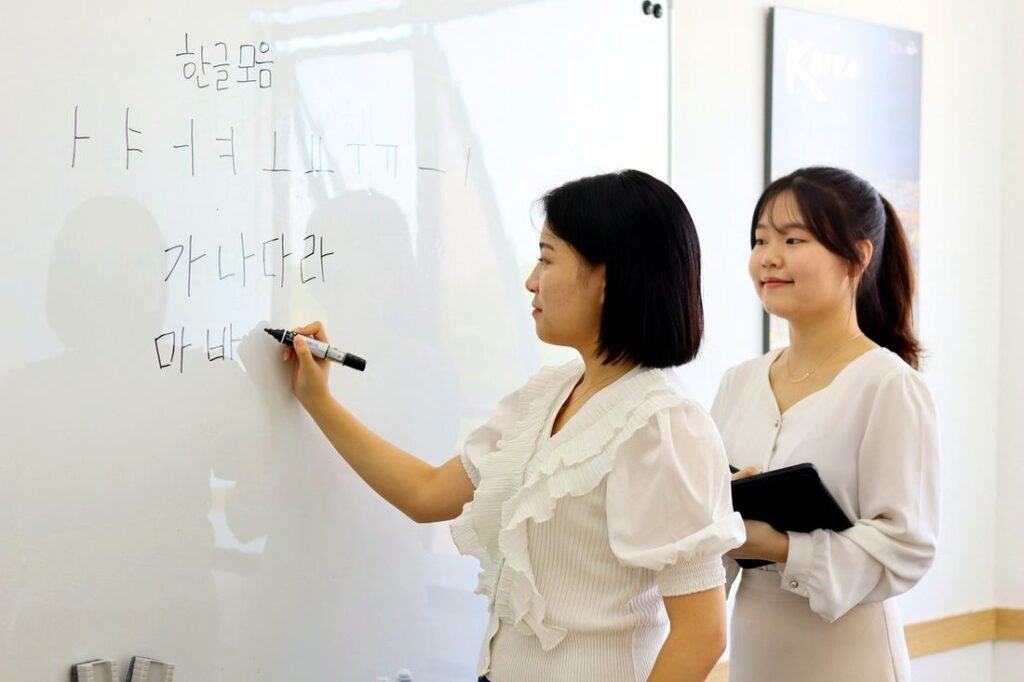
Who Teaches the TOPIK Course?
Every iSeodang teacher is a native Korean holding the Korean Language Teacher Certificate issued under Korea's Ministry of Culture, Sports and Tourism.
- 100% native Korean teachers with the official teacher certificate
- Experience preparing students for TOPIK I and II
- Essays marked personally by your teacher
- Small classes, so every student gets feedback
TOPIK Preparation FAQ
What is the difference between TOPIK I and TOPIK II?
TOPIK I covers Levels 1–2: Listening (30 questions) and Reading (40 questions) in 100 minutes, scored out of 200. TOPIK II covers Levels 3–6 and adds Writing: Listening (50), Writing (4) and Reading (50) in 180 minutes, scored out of 300. You do not choose your level — it is decided by your score.
What score do I need for each TOPIK level?
On the paper test, TOPIK I gives Level 1 from 80 points and Level 2 from 140 points (out of 200). TOPIK II gives Level 3 from 120, Level 4 from 150, Level 5 from 190 and Level 6 from 230 points (out of 300). The internet test uses a separate scale.
Is TOPIK the same as EPS-TOPIK?
No. TOPIK is run by NIIED and measures general Korean for study, work and residency. EPS-TOPIK is run by HRD Korea to select workers for the Employment Permit System in partner countries. Check which one your goal requires before you start preparing.
How long is a TOPIK score valid?
Two years from the result announcement date. Some universities and employers ask for a more recent score, so check their rules.
Which TOPIK level do Korean universities require?
Most Korean universities require Level 3 or 4 for undergraduate admission, and Level 4 or higher for graduate programmes and for graduation. Requirements vary by university and department. Our team can advise you in a free consultation, including our MOU partner universities.
How long does it take to reach TOPIK Level 3?
For a student starting from zero, Level 3 typically takes about 12 to 18 months of consistent study. Students who already read Hangul comfortably and have finished our Standard Course elementary level usually need considerably less.
Should I take the Standard Course or TOPIK Prep?
They serve different purposes. The Standard Course builds overall Korean ability with the Seoul National University textbooks. TOPIK Prep is exam training — past papers, timing, question patterns and scoring strategy. Students with a fixed exam date often take both at the same time.
How much does the TOPIK course cost?
Tuition depends on your level, class type and schedule, so we quote it individually. Message us on WhatsApp or email admin@iseodang.com and we will send the current fees.
How much is the TOPIK exam fee in Malaysia, and where is the test held?
The exam fee and venue are set by the official organiser, KEC Malaysia, not by iSeodang. For the 105th TOPIK in April 2026 the fee was RM 120 for TOPIK I and RM 170 for TOPIK II, at UniKL MIIT in Kuala Lumpur. Fees can change, so check the notice for your round.
Can I take TOPIK online from home?
No. Even the internet-based test (IBT) is taken on a computer at an official test centre. You can, however, prepare fully online with iSeodang and practise with our free online mock test.
Can I join the course from Indonesia, Vietnam or Thailand?
Yes. Our HyFlex and LMS Live Classroom let you join live lessons online with the same Korean teachers, materials and essay marking. Tell us your time zone when you message us.
Is there a free TOPIK mock test?
Yes. Our free online TOPIK mock test reproduces the real exam format and timing, so you can find your current level before you pay to register. The result is unofficial.
How many students are in each class?
A maximum of 8 students — the same cap as every other iSeodang course. 1-on-1 classes are also available if you are targeting a specific score by a specific exam date.
Does iSeodang register me for the TOPIK exam?
No. iSeodang is a preparation centre, not a test organiser. You register and pay the exam fee directly with the official organiser, and we are happy to explain the steps.
Ask Us About Fees, Class Times and Your Target Level
Tell us your current level, target level and exam date. We will recommend the right class and send you the current fees.
The fastest way to reach our team.
+60 11-2175 4639
Chat on WhatsAppBest for detailed questions, or if you prefer to write in another language.
admin@iseodang.com
Email admin@iseodang.comFree consultation
Pick a time and we will work backwards from your exam date — honestly.
cal.com
Book a free consultation ↗ (opens in a new tab)We reply in English, Korean, Chinese and Malay. For other languages, please contact us by email or text message.
Visit us
ISEODANG KOREAN LANGUAGE CENTRE2B Jalan Horizon Perdana 3, 79100 Gelang Patah, Johor, Malaysia
SSM 1268319-W · MOE JZ1B031 · KDN.IM.S.600-3/16/1203(2)
Your target level has a deadline. Start now.
TOPIK classes are capped at 8 students and fill up in the weeks before each exam. Message us and we will tell you which levels currently have space.